
The Market for 1959-D Pennies Depends on One Critical Factor
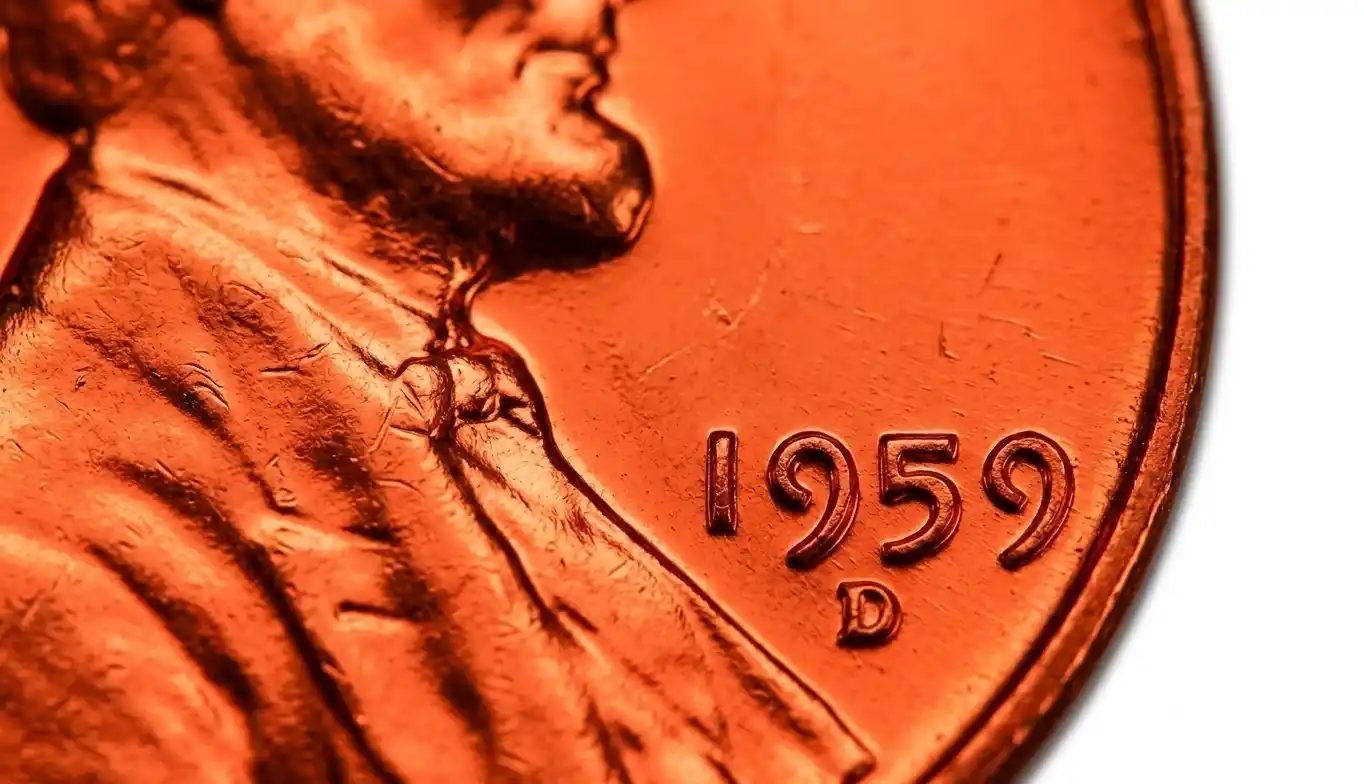
Experienced collectors judge these coins by luster quality and surface preservation before anything else.
Ordinary circulation items represent bulk inventory.
Specific 1959 production details provide foundational benchmarks for numismatic assessment.
Shift from wheat-back designs to Lincoln Memorial styles provides historical context for this issue.
Coins featuring D mint marks require careful attention due to high circulation densities.
How much is a 1959 D penny worth? Valuation analysis demands examination of metal surface conditions and strike sharpness.
Technical Production Metrics
Standardized parameters apply to all units manufactured during this cycle.
Specification | Metric |
Nominal Value | $0.01 |
Weight | 3.11 grams |
Diameter | 19.05 mm |
Composition | 95 percent copper alloy |
Thickness | 1.52 mm |
Assessment Methodologies
Professional grading services apply 1 to 70 point scales.
MS65 status represents minimum thresholds for serious investment interest.
Surface damage reduction directly lowers final realization prices.
Luster preservation dictates potential auction performance.
Growth dynamics for MS66 specimens:
2024 price: $15.00 per unit.
2025 price: $18.50 per unit.
2026 price: $22.00 per unit.
Manufacturing Anomalies
Technological process deviations create unique high-value specimens.
Double Die
Lettering contour duplication caused by die mismatch during striking.
Defect emergence → stamp misalignment against the blank disk.
Market impact → high value for rare samples.
Off-Center Strikes
Image shift relative to the geometric center of the blank.
Triggering cause → incorrect disk feeding into the press.
Price correlation → percentage of shift determines final valuation.
10 percent shift samples: $25.00.
50 percent shift samples: $200.00.
Die Cracks
Thin raised lines across surfaces resulting from die fatigue.
Defect identification → visual coin identifier app inspection.
Market premium → plus $7.00 over base value.
Investment Performance Data
Analytical records confirm sustained growth for high-quality items.
Attractiveness of 1959-D assets remains stable across recent cycles.
Price dependence on grading:
Condition | Market Value |
MS63 | $3.00 |
MS64 | $8.00 |
MS65 | $22.00 |
MS66 | $22.00 |
Copper Alloy Composition Analysis
Metal mixture influences long-term surface integrity.
Copper content totaling 95 percent of mass ensures characteristic coloration.
Remaining 5 percent composition consisting of zinc prevents rapid corrosion.
Metal discoloration signals improper storage environments.
Patina formation reduces asset value by 15 percent.
Professional Certification Procedures
Experts evaluate field cleanliness and relief sharpness.
Assessment steps:
Surface cleaning
Microscopic analysis
Numerical scoring assignment
Plastic capsules provide protection against environmental factors.
Authentication guarantees asset legitimacy on secondary markets.
Certification costs average $30.00.
Asset Acquisition Strategies
Investors apply systematic approaches to collection development.
Auction result comparisons highlight real-world market values.
Prior-period sales data confirms trend reliability.
Annual price appreciation for high-quality items:
2024 growth: 10 percent.
2025 growth: 12 percent.
2026 growth: 15 percent.
Mint Mark D Scarcity
Denver facility output reached 1,279,760,000 units.
Large supply limits appreciation for standard-grade items.
Collector value originates exclusively from perfect luster preservation.
Lack of circulation wear remains mandatory for high-tier pricing.
Common Search Errors
Typical behaviors causing capital loss:
Ignoring microscopic imperfections
Using inadequate lighting
Lacking comparative samples
Visual analysis requires experience and reference materials.
Surface cleaning destroys investment potential.
Cleaned specimens drop in value to $0.05.
Economic Liquidity Factors
Demand for 1959-D items correlates with broader metal market movements.
Copper price volatility influences values for low-grade inventory.
High-quality specimens demonstrate independence from raw metal costs.
MS66 investment returns outperform inflation rates.
Storage and Preservation Requirements
Optimal asset longevity factors:
Low humidity
Constant temperature
Sealed environments
Chemical reactions propagate during high-humidity exposure.
Professional holders prevent surface impacts.
Ownership history documentation boosts buyer confidence.
Market Demand Analysis
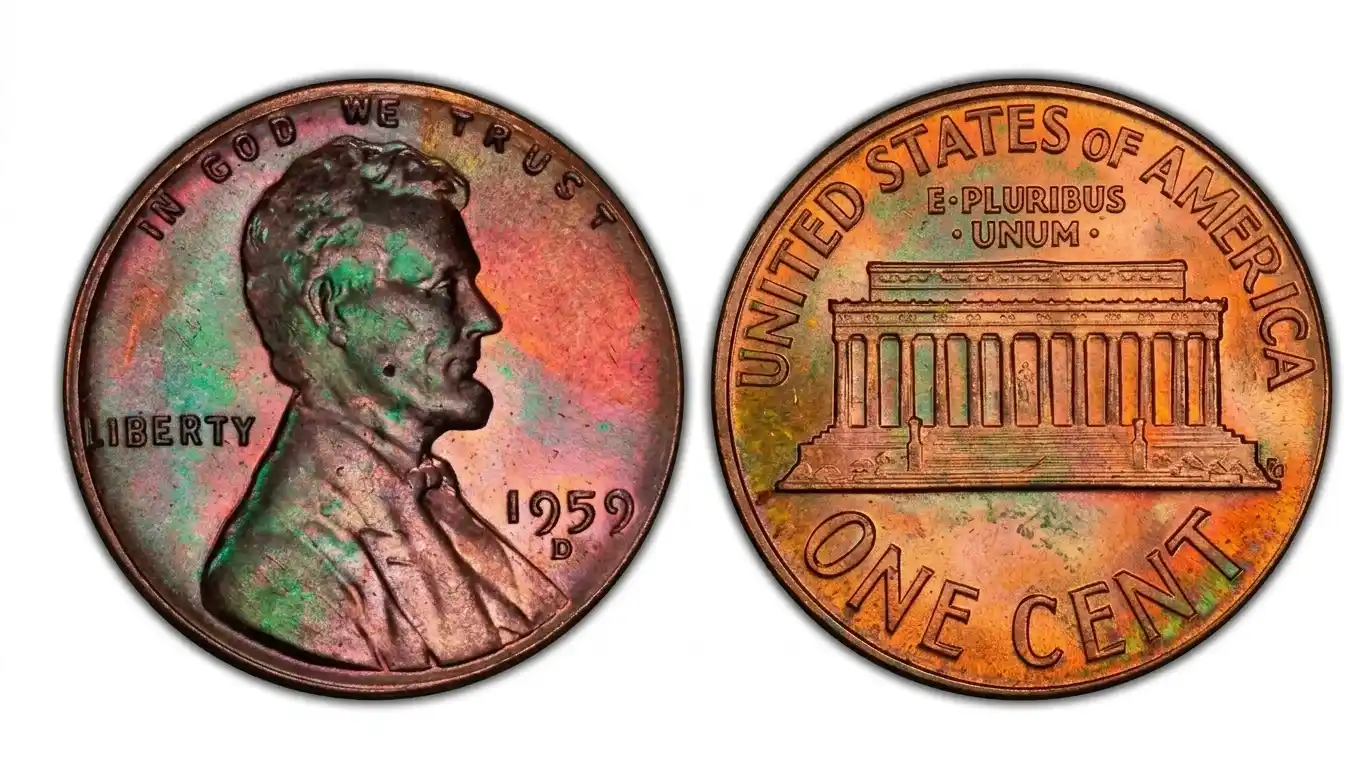
Auction activity confirms interest in 1959-D assets.
Monthly sales statistics:
January 2026 price: $21.00.
February 2026 price: $21.50.
March 2026 price: $22.00.
Current figures indicate consistent market appreciation.
Minting Technology Details
High-pressure presses ensure sharp detail reproduction.
Pressure irregularities cause missing elements.
Under-struck details reduce values by 30 percent.
Lincoln profile inspection reveals minting defects.
Catalog Reference Utility
Standardized guides provide baseline data on varieties.
Cross-referencing catalog values remains essential before acquisitions.
Discrepancies often signal overpriced listings.
Informed participants minimize deal failures.
Auction Sales Analytics
Major auctions document records for exceptional lots.
MS67 peak pricing reached $150.00.
Regular sales form statistical bases for valuation.
Data analysis establishes average market pricing.
Authentication Methods
Modern verification tools eliminate counterfeit items.
Weight comparison against 3.11 gram standards exposes fraud.
Rim inspection for casting seams confirms factory origin.
Coin value app scans reveal artificial tool marks.
Verification service costs average $5.00.
Expert Curation Recommendations
Collection systematization requires strict quality adherence.
Purchase registries simplify cost tracking.
Continuous grading education increases investment effectiveness.
Systematic approaches ensure capital protection.
Comparative Issues Analysis
1959 coins differ from subsequent designs in stamp details.
Comparison against 1960 units reveals letter placement changes.
Distinctions attract specialist attention toward 1959-D production.
Unique die characteristics sustain market interest.
Certification Significance
Authenticity certificates accompany valuable lots.
Documentation confirms condition class and surface integrity.
Certification boosts asset liquidity by 20 percent.
Investors prefer graded assets for high-value transactions.

Movie Marathon Ideas for Your Outdoor Cinema: Themes and Film Suggestions

How to Set Up the Perfect Outdoor Cinema: A Step-by-Step Guide